
Week 5 lecture, Thoughts on Ideas, Susanna Edwards.
Iain McGilchrist: The Divided Brain:
- The Frontal lobe’s role is to ‘inhibit’ and ‘stop the immediate from happening’. It enables us to ‘outwit the other party’, read the intentions of others and empathise. It provides ‘necessary distance’ allowing us to acknowledging experiences of others.
- ‘Distance from the world that is provided is profoundly creative of all that is human’
- What role does empathy play in graphic design thinking, connecting and communicating?
Critical Reflection:
Empathy allows us to consider a wide spectrum of perspectives and evaluate how design is received on an emotional and psychological level. Empathetic design humanises the corporate world, allowing large audience to emotionally connect with global brands. In an increasingly political social climate with progressive values towards the rights of humans, animals and even the earth, businesses are required to demonstrate social responsibility through their brand identity and marketing. As the corporate, social and political values of businesses become more defined and businesses are obliged to demonstrate morality and solidarity through language, regulations and visual communications, the market is more saturated by emotive imagery for an overwhelming number of causes resulting in conflicting feelings of feel good consumerism and ‘compassion apathy’.
Empathy is one of the core conditions that drove me from fine art to graphic design, as I wanted to use my creative skills to empower socially responsive campaigns and initiatives that I felt were important. In relation to last weeks topic, the self and associated ideas of temporality and death, highlighted by Anthony Giddens, the awareness of finitude and our own sublime insignificance allows us to appreciate the limitations of others, the preciousness of life and the existential anxieties experienced by other sentient beings.
After analysing Edward Bernays’ influence on mass consumer culture through application of Freudian psychoanalysis, I’ve become more aware of the exploitation and capitalisation of human emotion and interested in the ethics of design in marketing and advertising. An emphatic example of this can be identified in the marketing of animal products using labels such as ‘Free Range’ and ‘Red Tractor’ which in practice have minimal impact on the day-to-day wellbeing of animals, however act as visual ques to communicate ethical responsibility and high welfare standards, employing ‘feel good’ marketing tactics, much like Edward Bernays’ technique of publishing biased health studies in favour certain products.
Perhaps the over representation and distortion of compassion in advertising is an example of the ‘paradoxical’ nature of the 21st century, along with ‘adversity and fulfilment’, ‘restraint and freedom’ and the pursuance of happiness that leads to resentment, unhappiness and mental illness as outlined by Iain McGilchrist. This also brings to mind Sartre’s existentialist idea of ‘potentiality’, whilst the self-destructive patterns validate Freud’s argument in Civilisation and its Discontents about man’s inability to truly be free and therefore he will always be ‘discontent’.
- How do we as designers combine ways of seeing, reading, comprehending and seeing?
- We prioritise the virtual over the real – bureaucracy flourishes – how can we bring the real into the virtual?
- What role can we take as graphic designers to nurture the intuitive mind to create broader contexts of thinking to create new services, ideas forms of communication and collaboration?
Alain De Botton: Thinking Too Much; and Thinking Too Little
- “It is part of the human tragedy that we are such natural self-deceivers. Our techniques are multiple and close to invisible. Two are worth focusing on in particular: our habit of thinking too much. And our proclivity for thinking too little”.
- Thinking too much: “We deploy knowledge and ideas that carry indubitable prestige to stand guard against the emergence of more humble, but essential knowledge from our emotional past… We lean on the glamour of being learned to make sure we won’t need to learn too much that hurts”.
- Thinking too little: “We pretend that we are simpler than we really are… We lean on a version of robust common-sense to ward off intimations of our own awkward complexity”.
- “Self-knowledge isn’t a luxury so much as a precondition for a measure of sanity and inner comfort”.
Critical Reflection:
Alan de Botton’s analysis on human kinds paradoxical relationship with ‘thinking’, pursuing and dismissing knowledge in order to regulate our understanding of the self and of the world, further relates to Freudian psychology, exemplifying the protection and self-deception of the ego. By pretending that we are ‘simpler than we really are’ in order to cope with our own overwhelming complexity, we engage in a process of ‘simplifying’ our ‘reality’ as Iain McGilchrist explained. This simplification process is inherent in design and how our contemporary civilisation is organised through visual communications, semantics, abstract systems and even social stereotyping. Although design is a product of human though, it is excitingly a catalyst for progressive change through the dismantling and challenging of old ideas and thought processes.
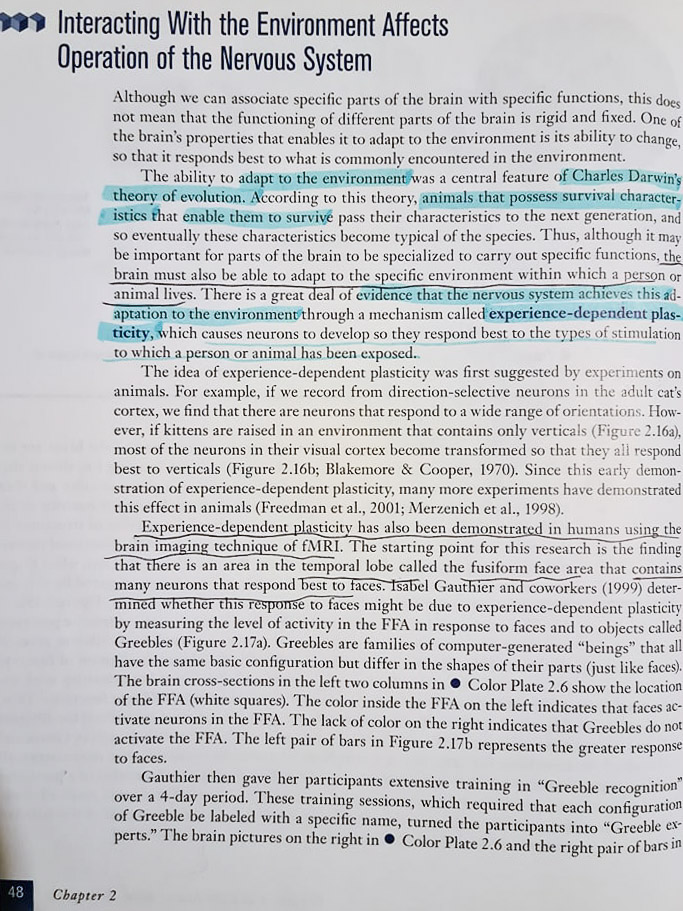
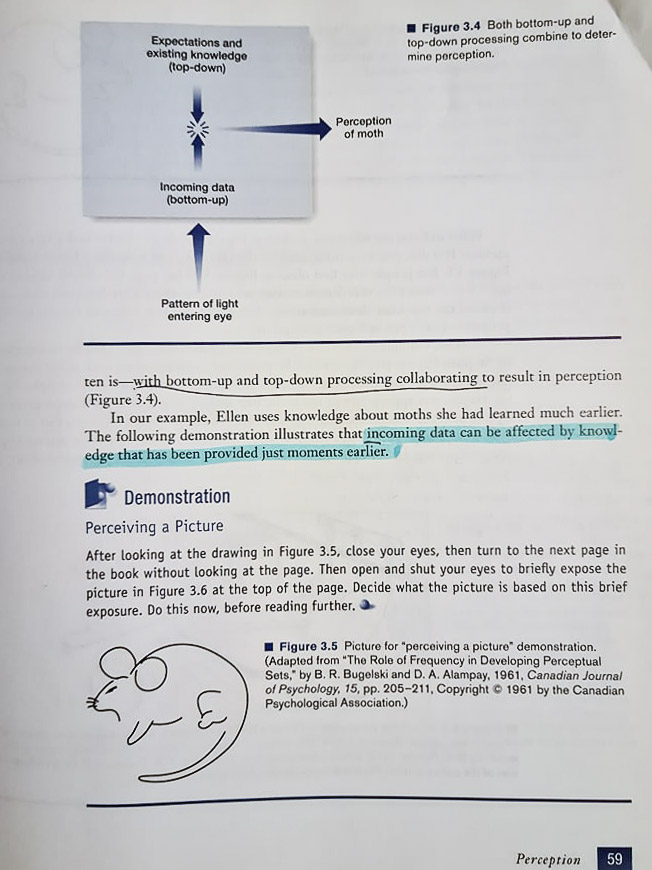
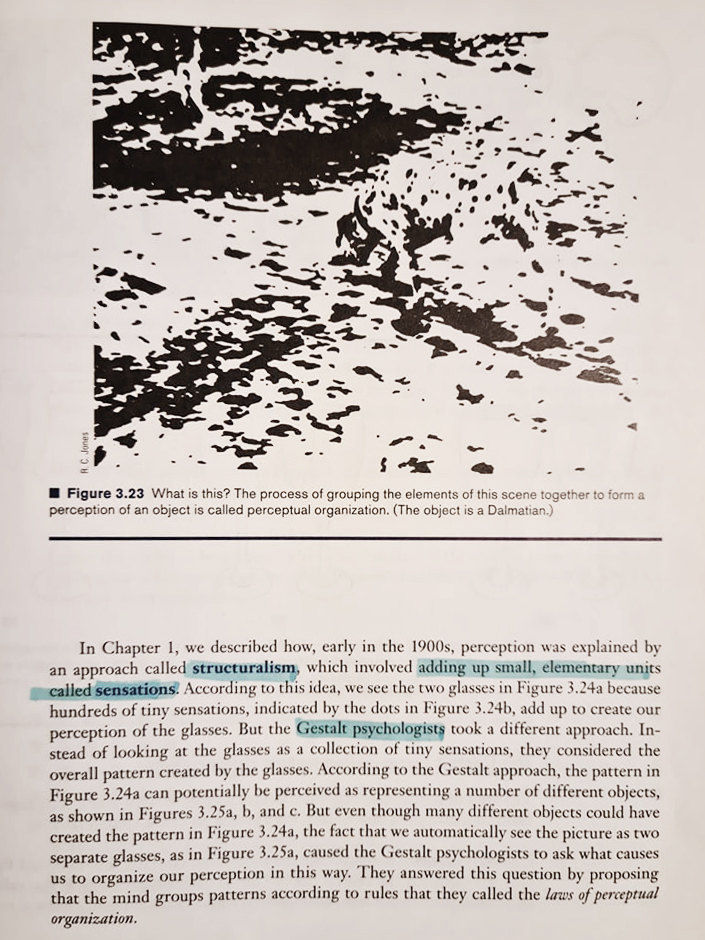
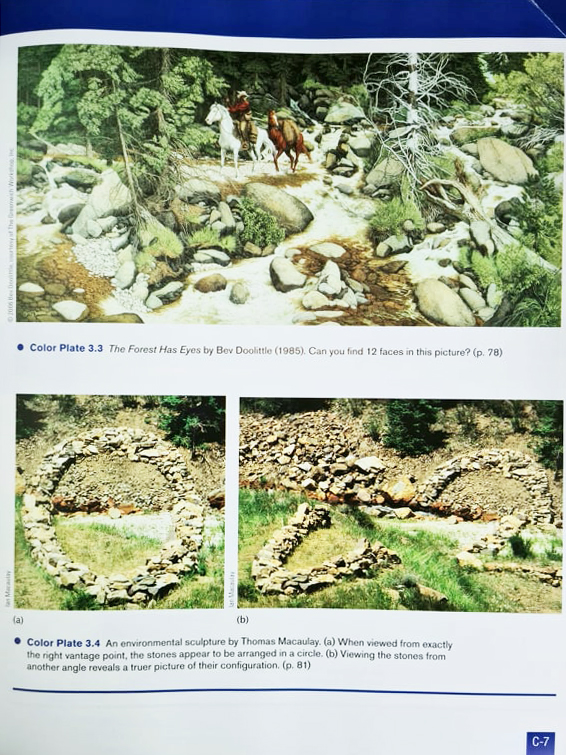
Cognitive Psychology: Connecting Mind, Research and Everyday Experience
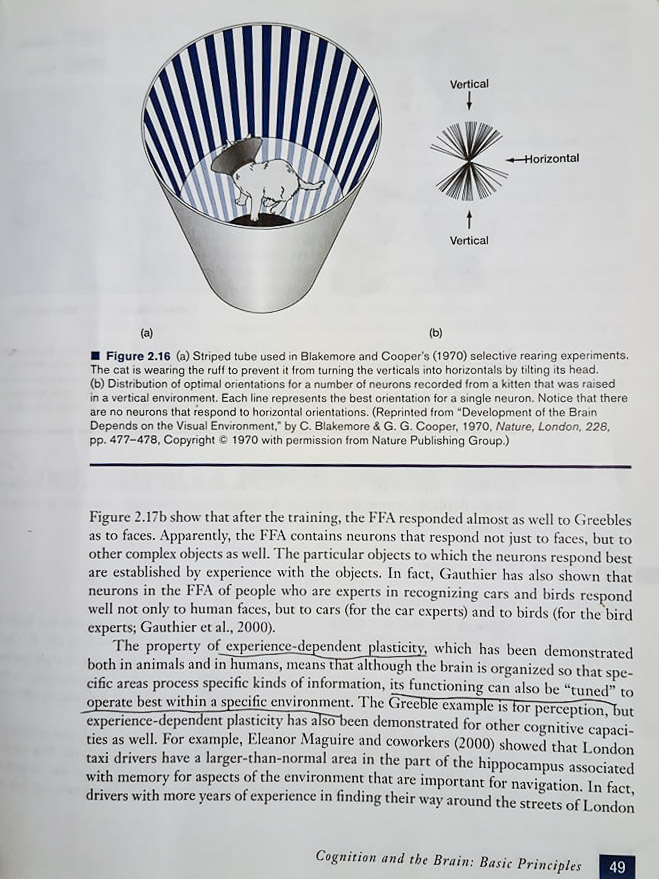
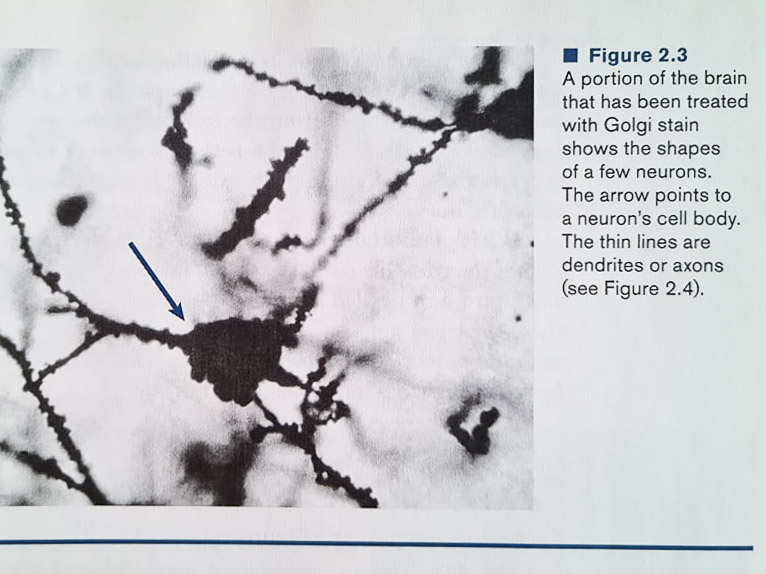
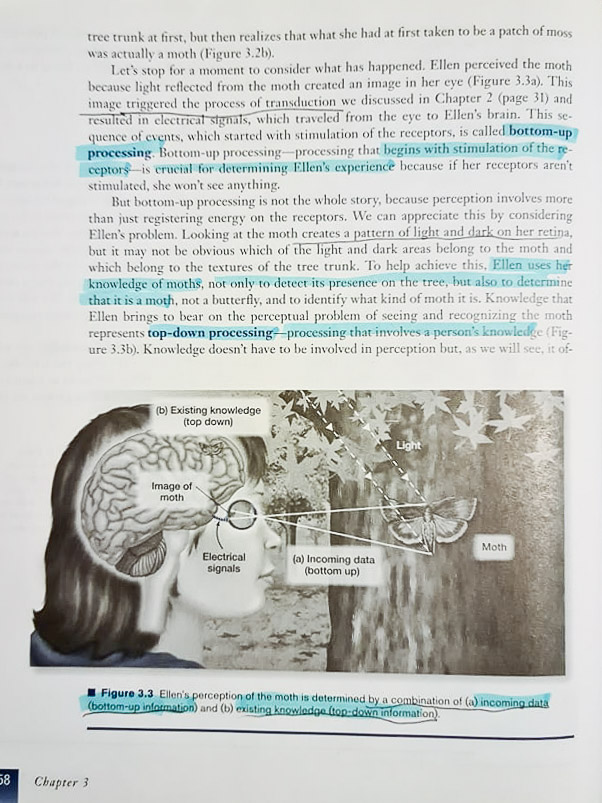
Further Research: Photography
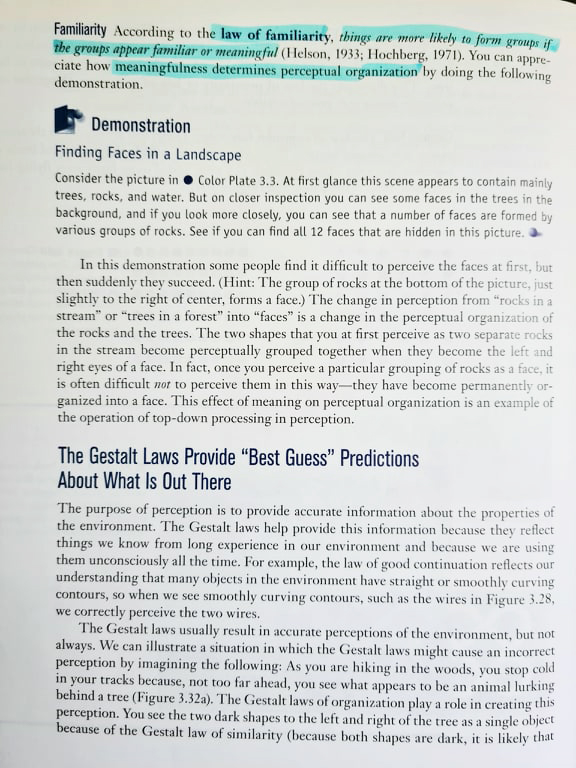
The law of familiarity: finding faces in a landscape


Workshop Challenge
I was really excited by this brief as an opportunity to explore thinkers from various fields, however I found it difficult to choose and commit to one idea.

Idea 1: Richard Long
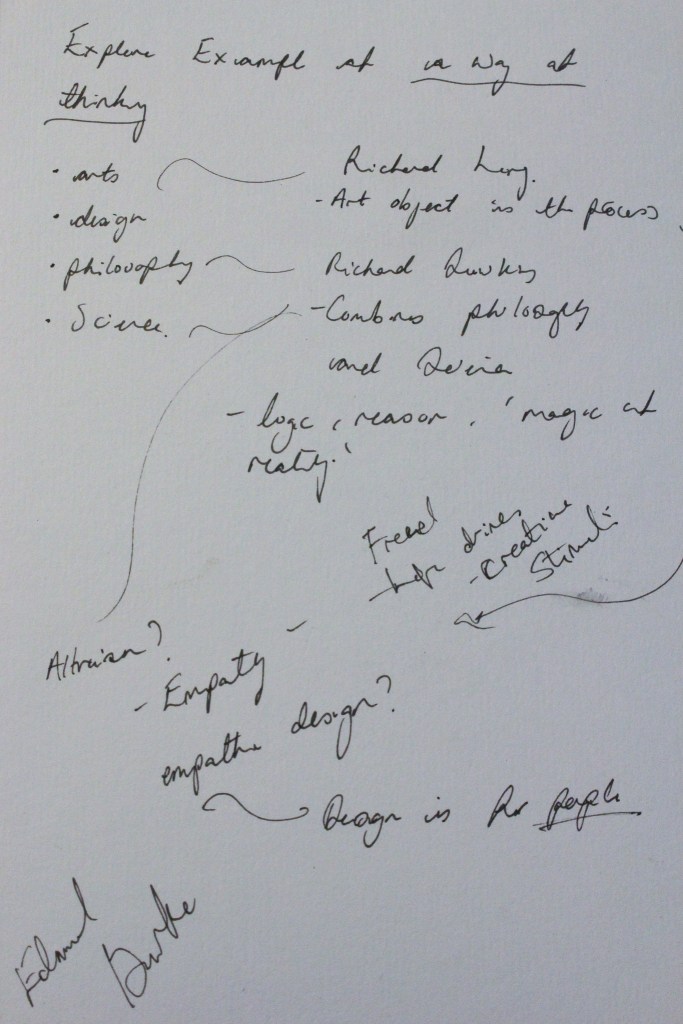
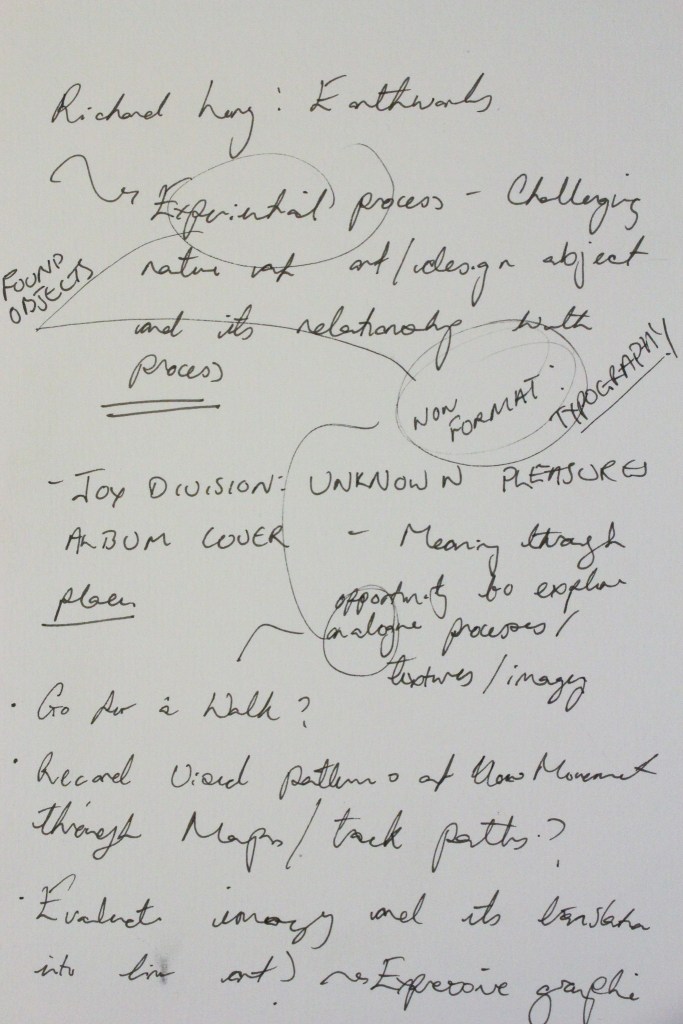
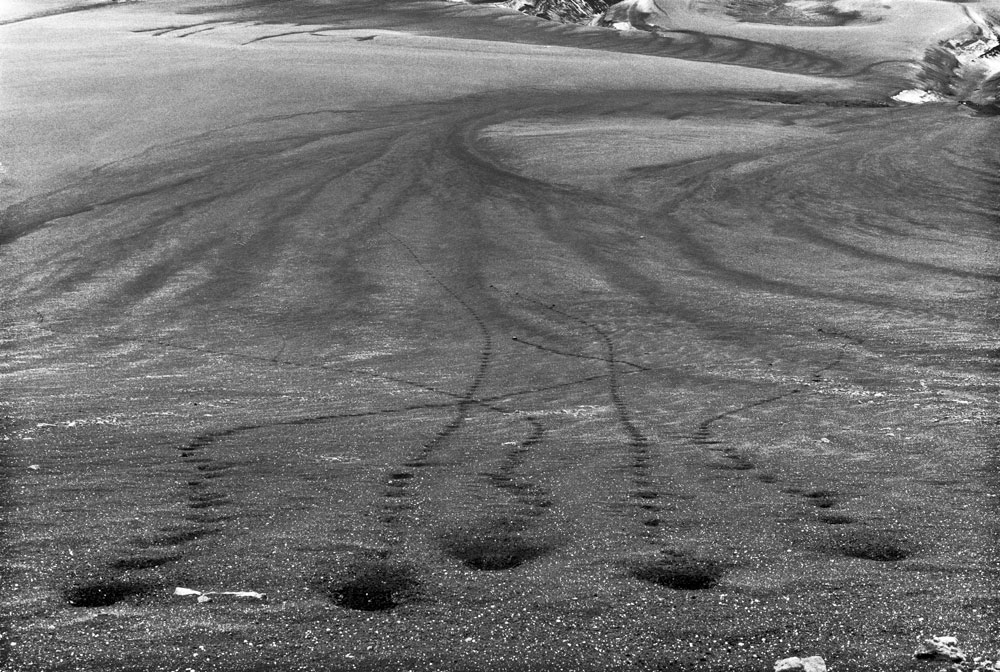
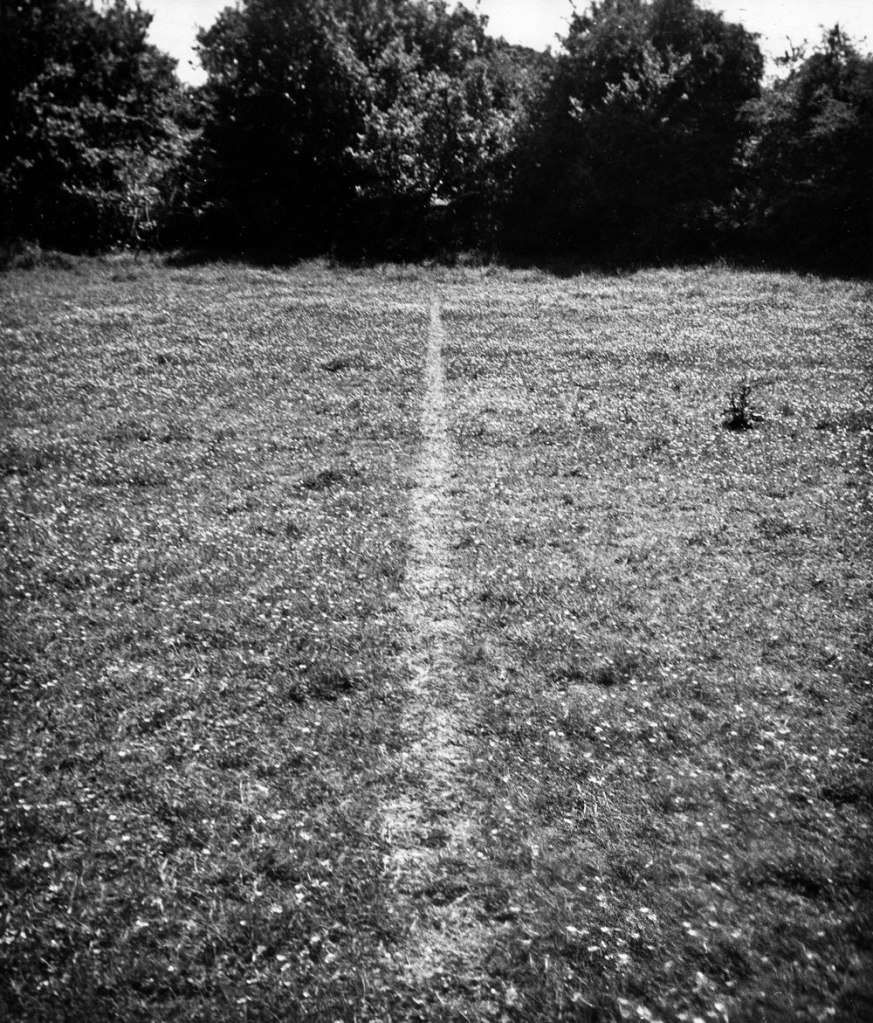
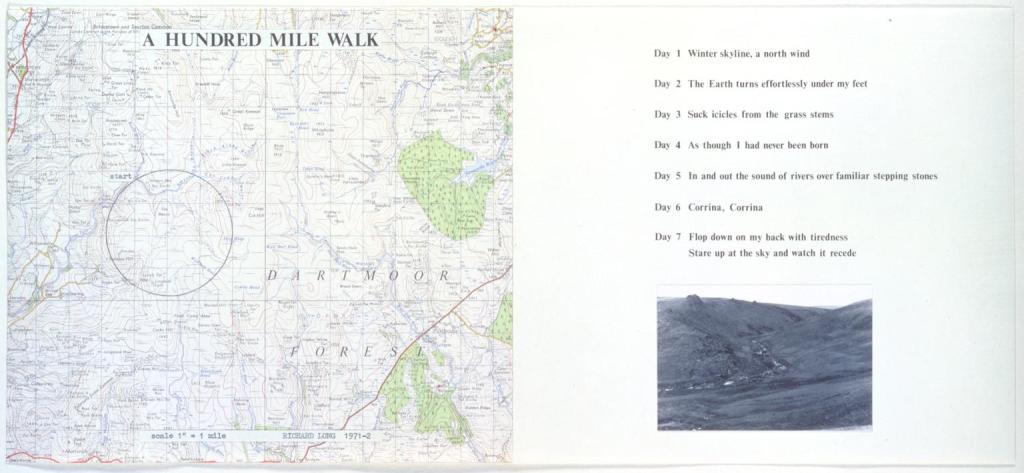
Richard Long’s ephemeral practice of ‘earthworks’ challenges traditional perceptions of creative outcome or subject through process driven practice. Considering feedback from tutors regarding process and the evolution and refinement of ideas, I wanted to choose a way of thinking that has a practical emphasis on process, risk and play, much like Thomas Heatherwick’s ‘Thinking through making’ and Paula Scher’s idea that one must be in a ‘state of play in order to design’.
Considering the covid-19 restrictions in particular, my personal world has felt noticeably smaller and my inspiration narrower. Richard Longs ‘earthworks’ encouraged me to engage more fully in experimental process through his experiential approach to mark making in the landscape through physically moving through space. Although aesthetically evocative and poignant in their own right, the photographic representations of the marks take on additional meaning of our existential reality in the context of our environment and the experiential nature of creative process. Inspired by Iain McGilchrist’s notion of contemporary society’s favouring of the ‘virtual over the real’ in Susanna Edwards’ lecture, I thought this idea would be a a great opportunity to explore mark making though analogue methods.

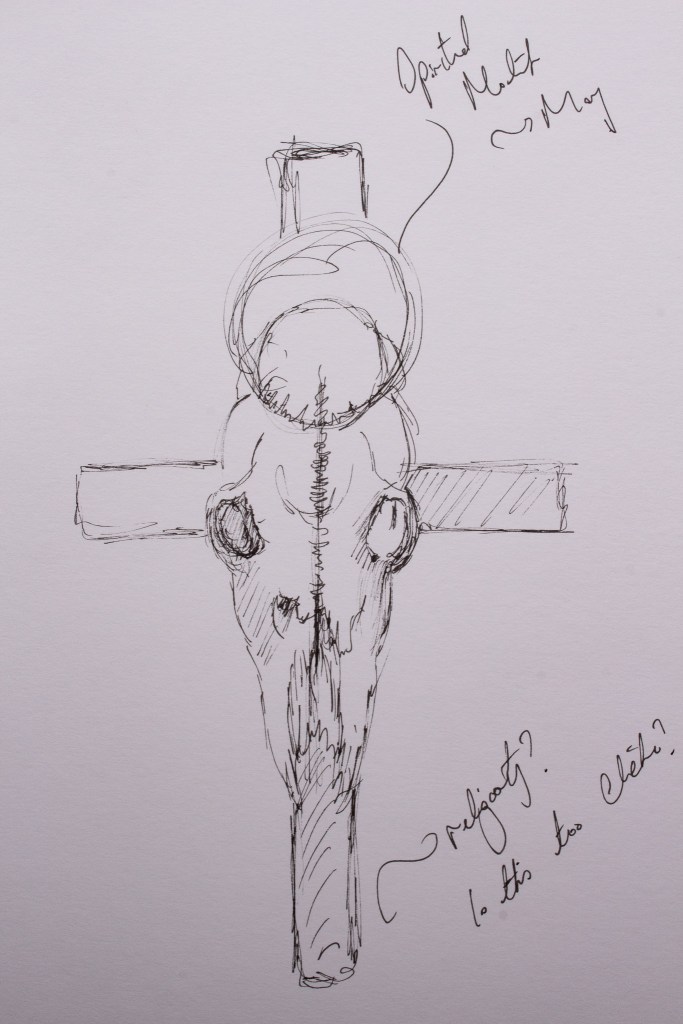
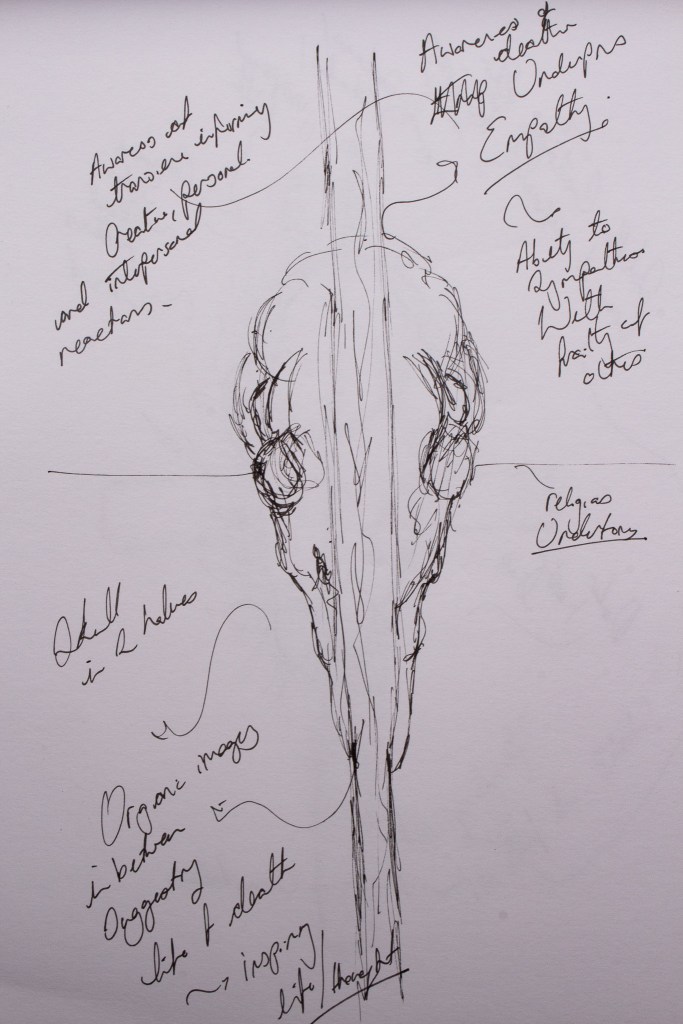
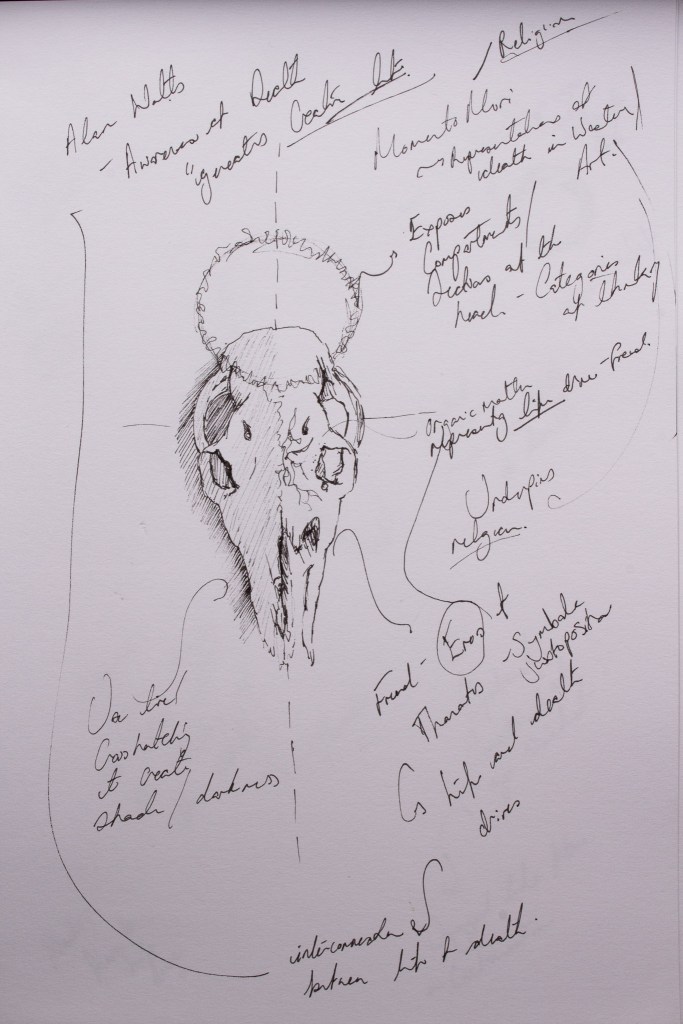
Idea 2: the Eros and Thanatos. The Freudian Life and Death Drive





Chosen Idea:
Leon Festinger: Cognitive Dissonance
Cognitive Dissonance in the Paradigm of Meat Eating: The Meat Paradox
Cognitive dissonance is a psychological concept coined by Leon Festinger in the 1950s, describing the uncomfortable tension between an individuals beliefs, morals and values and the actions that they are engaged in. The dissonance theory examines how we are motived to rationalise or justify the discrepancy between our values or actions by adapting our identities and the opinions of other in alignment with the decision. Meat consumption is one of the fascinating paradigms that cognitive dissonce can be examined, as most individual feel that unnecessary animal harm is immoral, however we contradict this social consensus when we consume animal product which inevitably cause harm. This is known as ‘the meat paradox:
“The meat-paradox can be understood from the perspective of dissonance …a state of emotional discomfort that people experience when they hold inconsistent attitudes or engage in behavior that is inconsistent with their attitudes or beliefs.”
Bastian, B & Loughnan, S 2017, ‘Resolving the meat-paradox: A motivational account of morally troublesome behavior and its maintenance’, Personality and Social Psychology Review, vol. 21, no. 3, pp.278-299.
The emotional psychological complexities of the meat paradox are also analysed by Psychologist Dr. Hank Rothgerber, author of Meat-related cognitive dissonance: A conceptual framework for understanding how meat eaters reduce negative arousal from eating animals (2020).
Abstract: “Meat eaters encounter a conflict between their eating behavior and their affections toward animals. Because this “meat paradox” highlights discrepancies between behavior and various ideals, a number of experts have focused on cognitive dissonance theory to explain the psychology of eating meat. The present work presents a framework to understand the phenomenon of meat-related cognitive dissonance (MRCD), herein defined as occurring when the dissonant state involves recognition of one’s behavior as a meat eater and a belief, attitude, or value that this behavior contradicts. The proposed framework explains how individuals attempt to prevent this form of dissonance from occurring (e.g., avoidance, willful ignorance, dissociation, perceived behavioral change, and do-gooder derogation) and how they reduce it once it has occurred in the form of motivated cognitions (e.g., denigrating animals, offering pro-meat justifications, or denying responsibility for eating meat). The MRCD framework posits that which of a possible fifteen outlets is chosen to prevent and reduce the moral guilt associated with eating meat depends on (a) the aspect of meat consumption that produces MRCD; (b) the motivation created by MRCD; (c) individual differences in gender, values, affinity toward animals and meat, and exposure to animals; and (d) culture. Implications of the framework for those seeking to curtail meat consumption are discussed and important questions are highlighted for theorists to resolve.
I chose this idea as it has an interesting correlation with the notion of empathy explored in Susanna’s lecture. Empathy can be explored in graphic design as a political tool to disrupt the processes of cognitive dissonance in order to influence positive social change regarding issues such as factory farming and other animal rights and welfare issues.
References
- Leon Festinger (1957) A Theory of Cognitive Dissonance. Stanford University Press
- Hank Rothgerber (2020) Meat-related cognitive dissonance: A conceptual framework for understanding how meat eaters reduce negative arousal from eating animals
- Bastian, B & Loughnan, S 2017, ‘Resolving the meat-paradox: A motivational account of morally troublesome behavior and its maintenance’, Personality and Social Psychology Review, vol. 21, no. 3, pp.278-299.
A Lesson in Cognitive Dissonance: ‘Dr, Philip Zimbardo walks us though a lesson in Cognitive Dissonance. Dr. Leon Festinger’s theory shows us the precursor to Justification of Effort.’
Development
Final Outcome
Critical Reflection
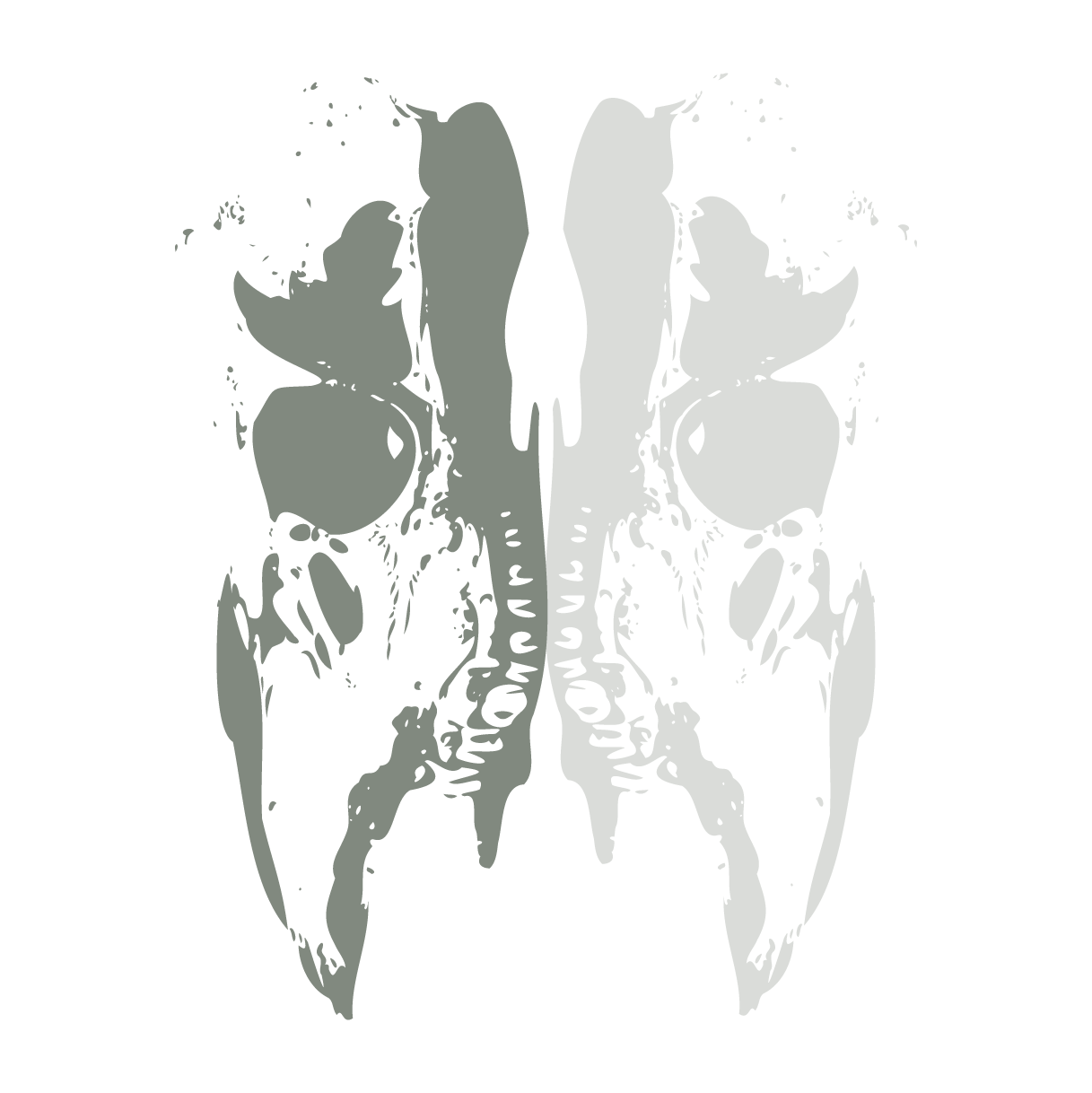
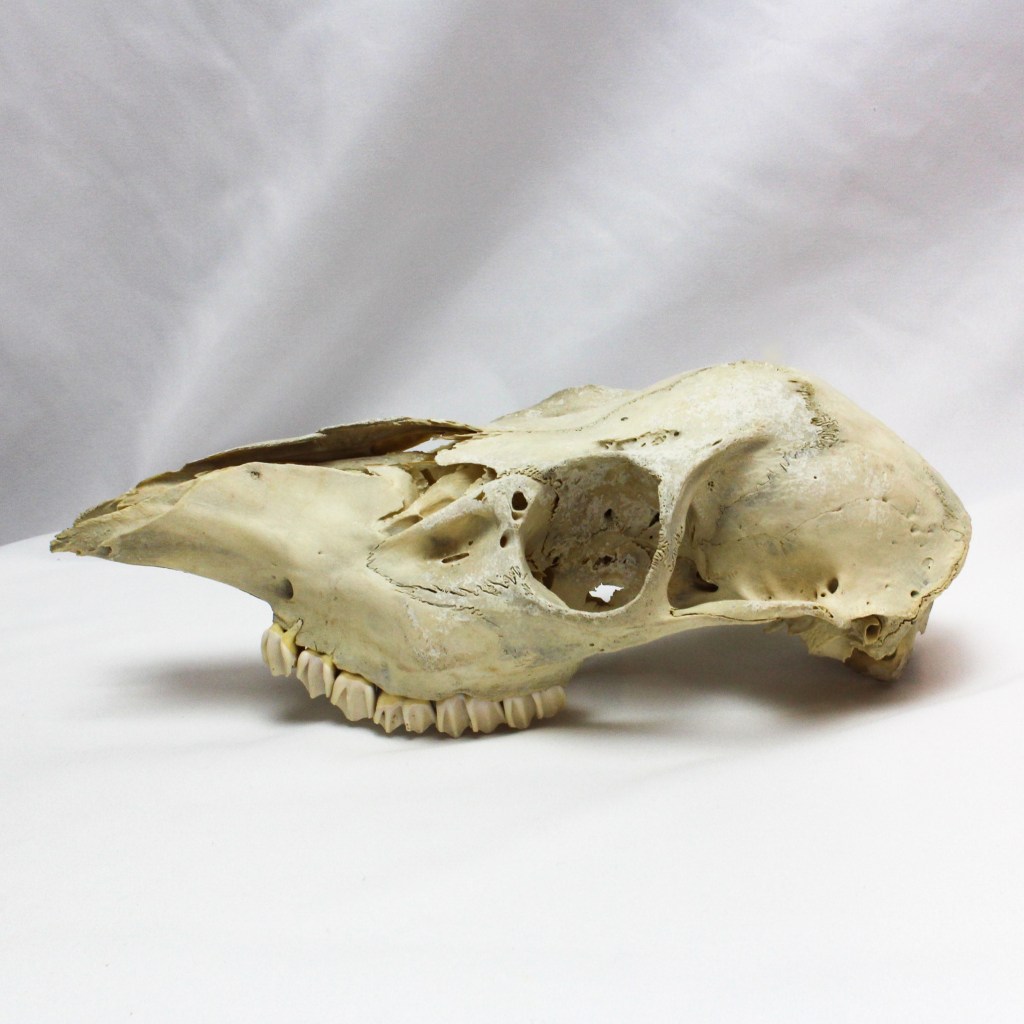
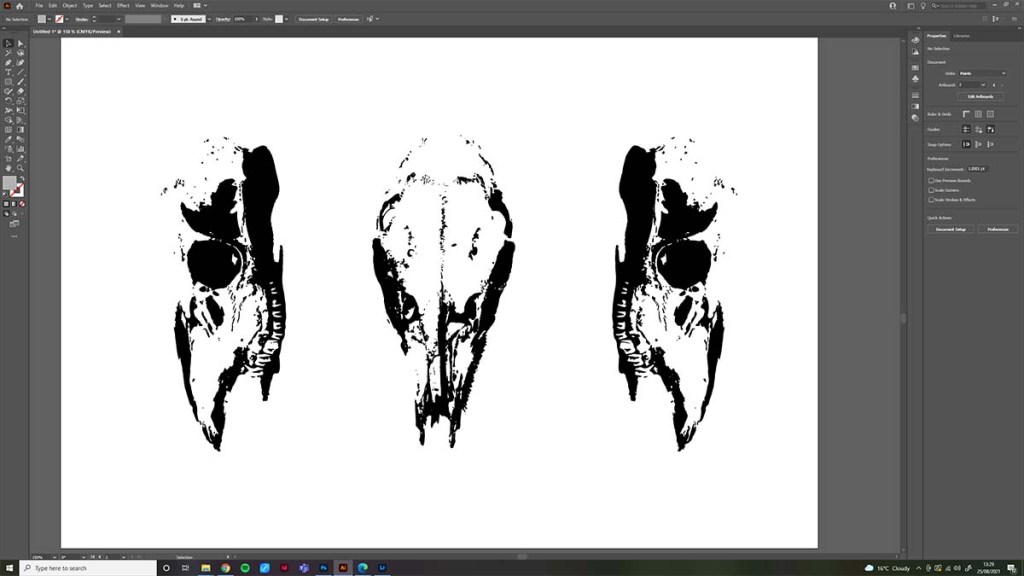
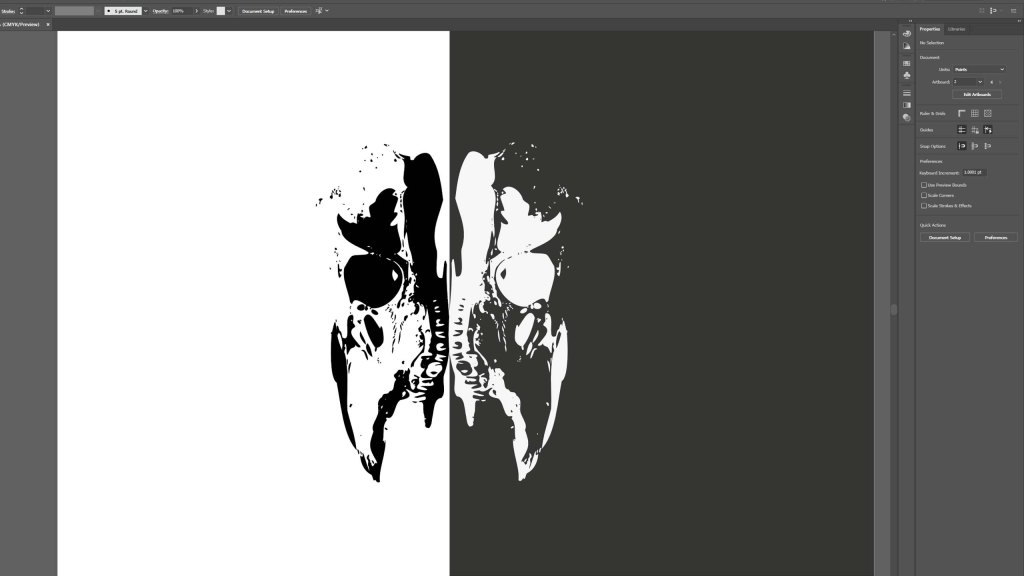
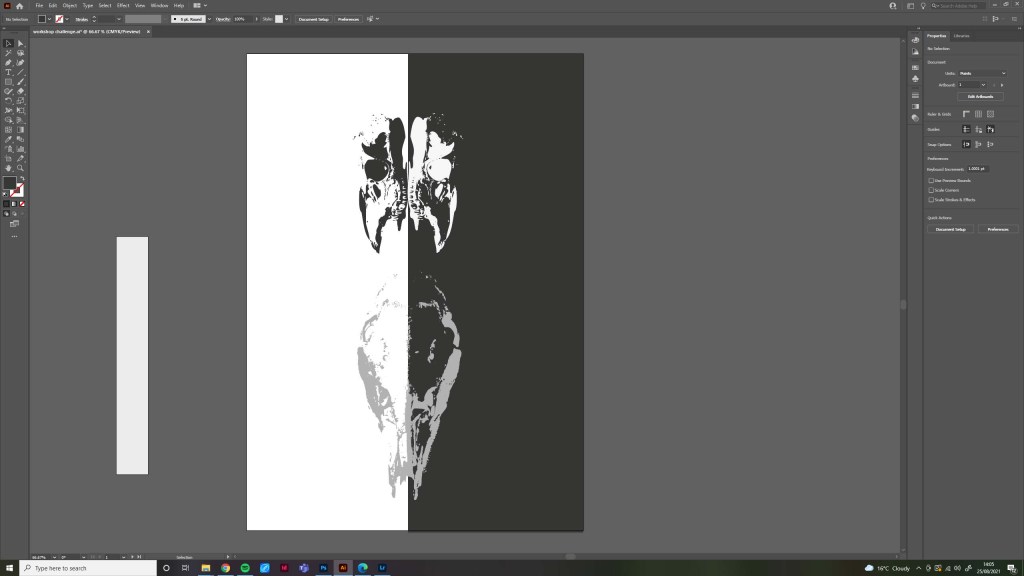
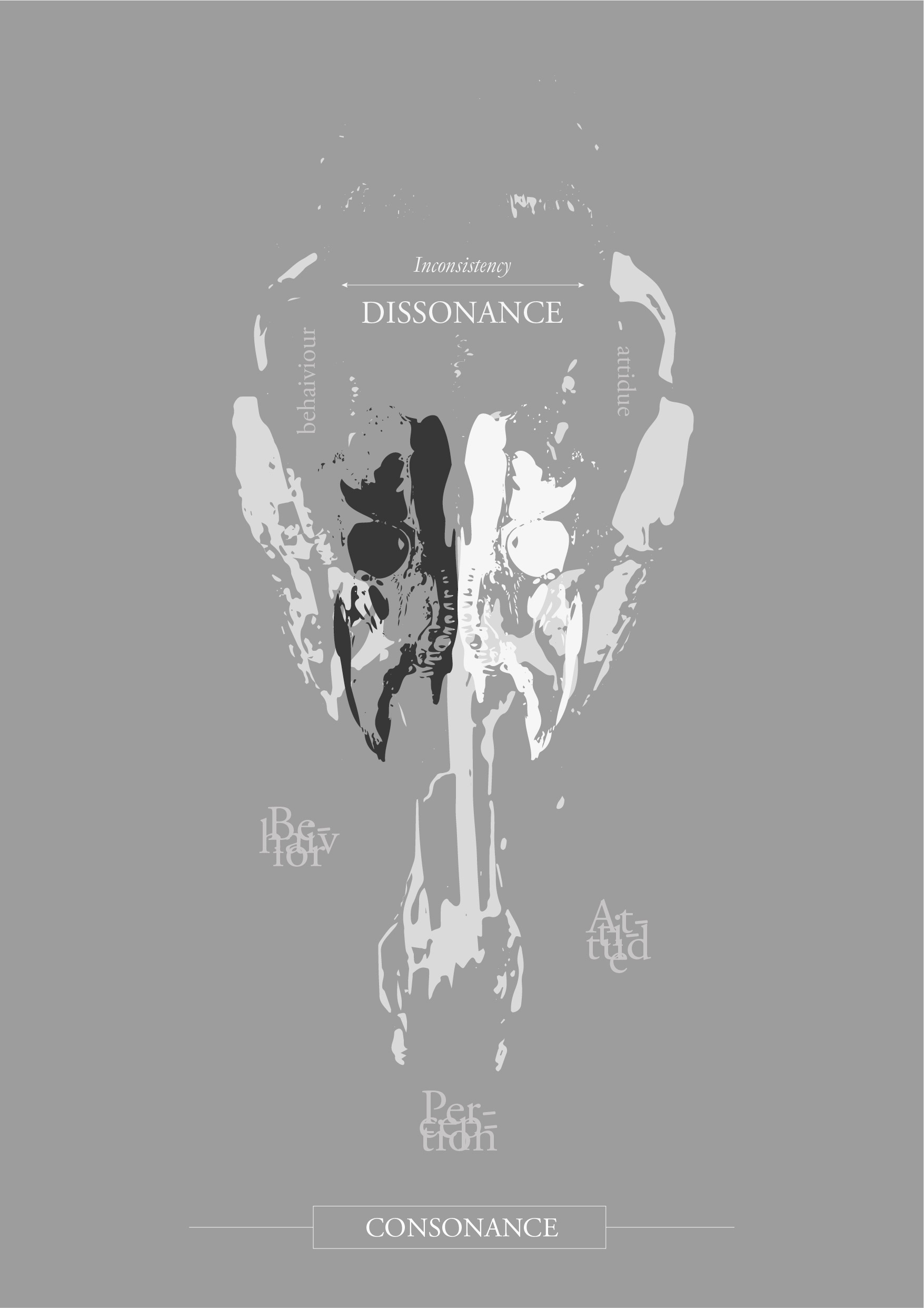
The final version uses abstracted images of the deer skull to represent cognitive dissonance in the paradigm of the meat paradox. The two asymmetrical side profiles reference the 2 competing cognitions and experience of inconsistency between attitudes against animal harm and our behaviour or eating meat.
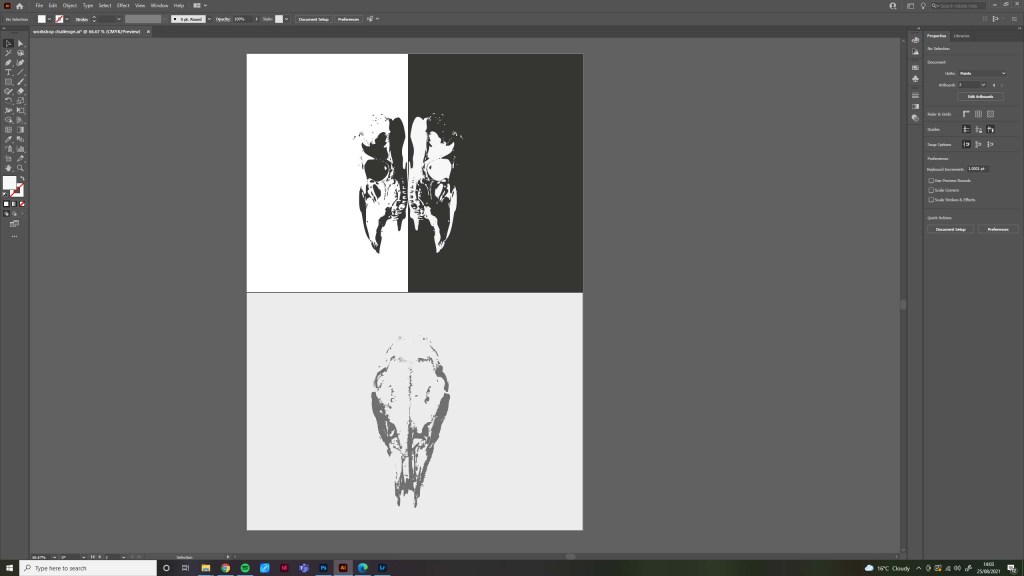
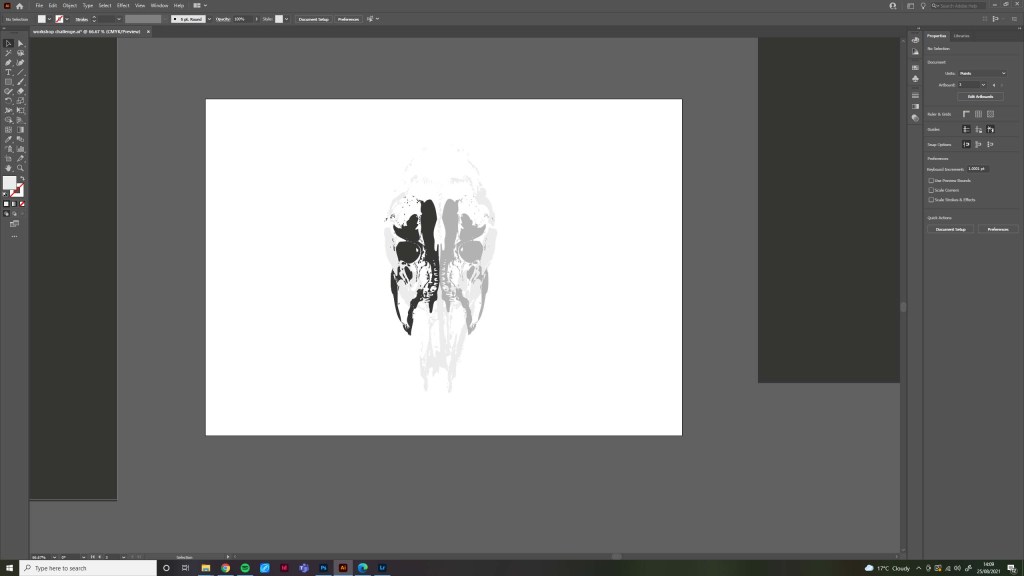
The overlaid representation of the skull from a frontal view encases the side profiles to emphasise them as internal psychological processes. I experimented with image tracing capabilities in Adobe Illustrator to further abstract the form into a simplified line drawing style. This differentiation of the overlaid image emphasises the creation of new perspectives as a result of dissonance.
In this way, the external typographic elements are also disrupted to demonstrate altered perspectives which are projected from the internal experience of dissonance. Type hierarchy is also used to emphasise the achievement of ‘consonance’, a feeling of psychological consistency through this process. Even though I tried to simplify the images into line drawing style elements, I’m conscious that they more like examples of painterly mark making, however I felt that the textural layers conveyed an important sense of psychological complexity, depth and emotional sensitivity related the the concept of cognitive dissonance in the context of meat eating. I really liked how stylistically the image connotes to the Rorschach test, a psychological test in which subjects’ perceptions of inkblots are recorded and analysed. If I had more time I would have experimented more with this graphic style. Additionally, I feel that the symbolic illustrative nature of the piece could be developed into alternative music packaging/ posters etc, therefore I would also like to develop the use of colour and texture.

 CATHY DAVIES